From Weberia to weTheON: Why I Stopped Building Generic Themes
A decade of building e-commerce themes — from Webasyst to Shopify. Why I left, what I learned building an airline website and enterprise portals, and why I came back.
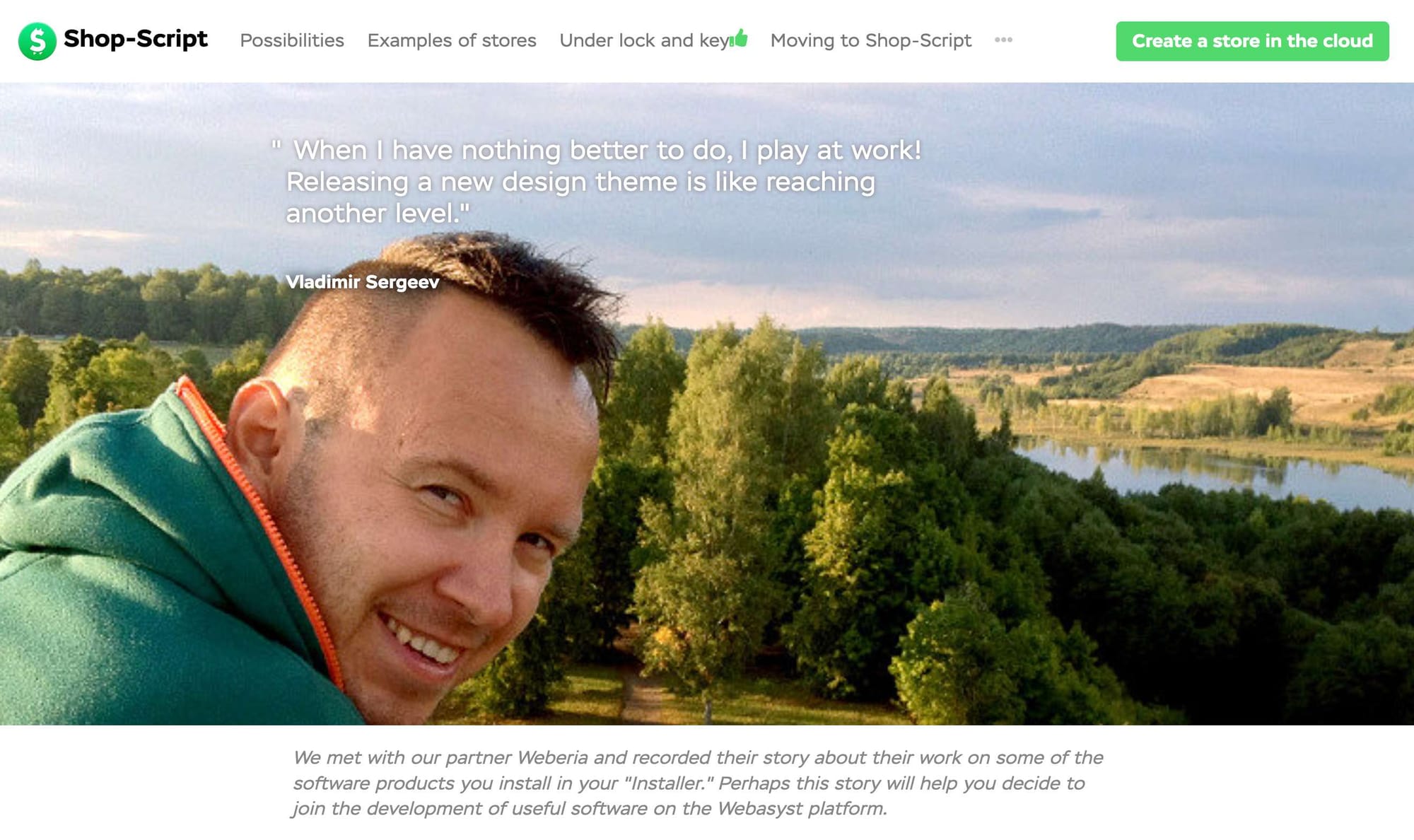
Nine years ago, an e-commerce platform published an interview with me. I was 32, working from home somewhere in Eastern Europe, building design themes for a platform called Webasyst. The headline quote they chose was: "When I have nothing to do, I play at working! Releasing a new theme is like beating another level."
I was about to become a father. I had big plans. And I had no idea that everything was about to change.
The Kid Who Taught Himself to Code
I graduated as an electrical engineer. Never worked a day in that field. Instead, I taught myself front-end development through Lynda.com courses, Treehouse tutorials, and a lot of books.
I started with WordPress — cranking out up to three themes a month for clients. They were cookie-cutter work, but they sharpened my skills. Then I discovered Webasyst, a self-hosted e-commerce platform popular in Eastern Europe, and everything clicked.
Building themes for online stores wasn't just work. It was a game. Each theme was a new level to beat.
The Weberia Years
Under the brand Weberia, I shipped theme after theme for Webasyst's Shop-Script:
- Picco Shop — my first attempt, built in a month from a starter template. Spent another year polishing it.
- Landing Shop — adapted from a side project gathering dust in my drawer.
- Formula of Success (originally "Flatty") — built from scratch on Bootstrap 2. Nine months of development, another year of updates.
- Stylish Site — an experiment with AJAX navigation, no page reloads.
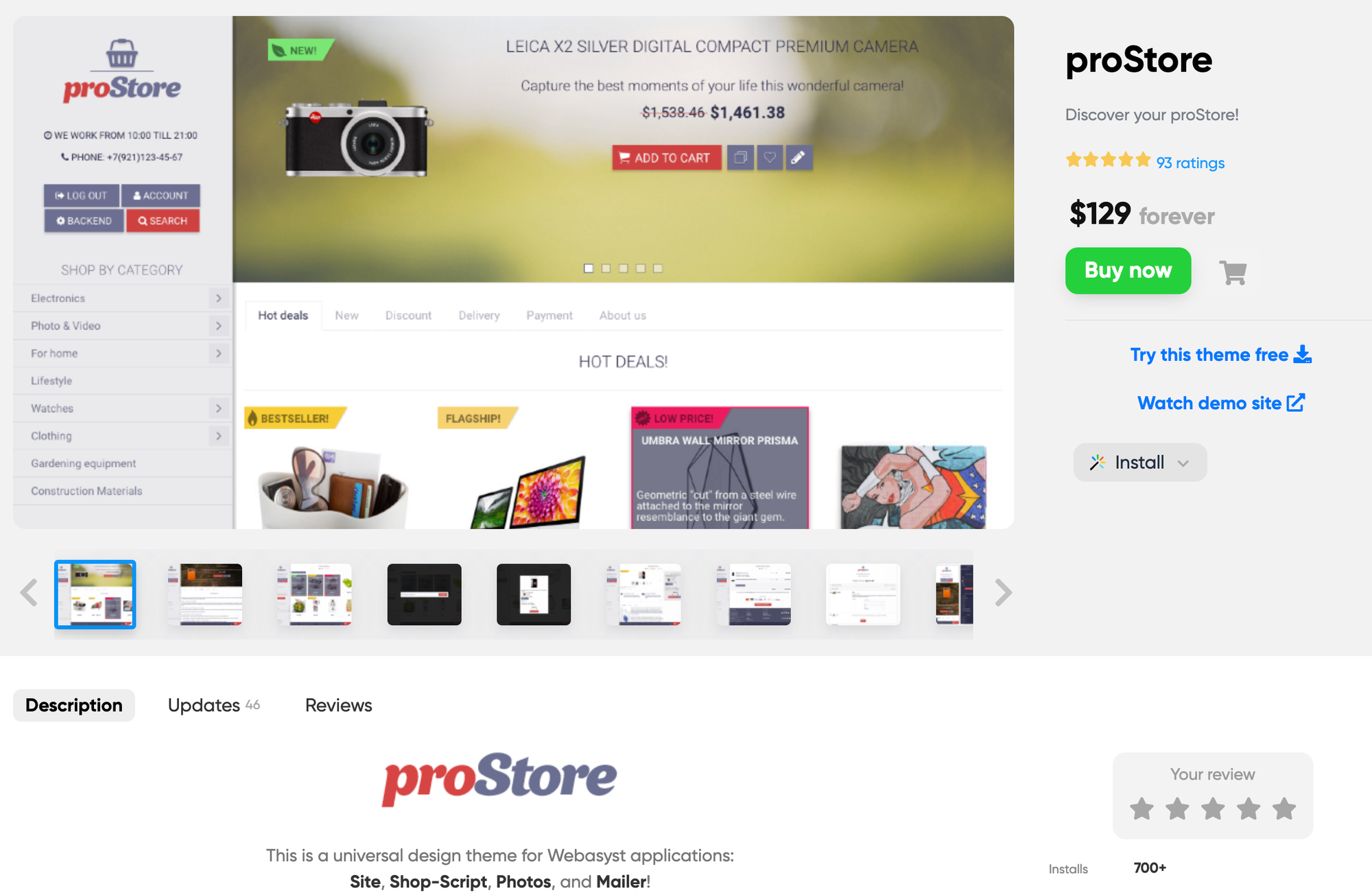
- proStore — my favorite. My first flagman. Built without any css framework. Real mobile-first, real responsive. Published with zero leftover issues.
Each theme was better than the last. I was learning architecture, performance, user experience — all through the lens of e-commerce. The interview captured a moment when I felt invincible. "My plans are grand," I told them. "There will be a lot of interesting things from me in the Webasyst store."
And I delivered. After proStore, I built an entire family of themes on the UIkit framework — each one pushing a different idea:
- Super — the parent theme. A foundation I built once, so all child themes could inherit it without duplicating code.
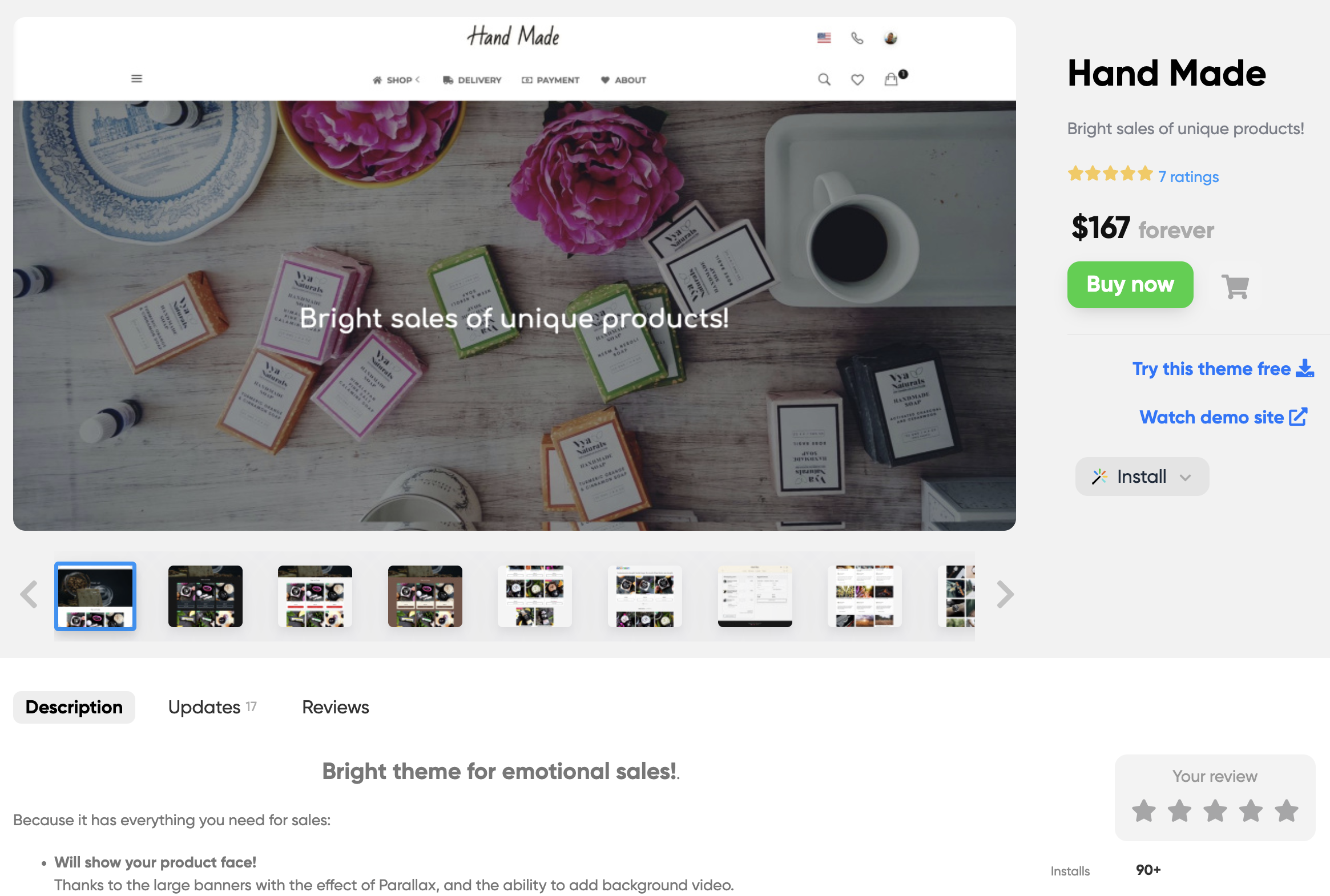
- Hand Made focused theme — designed specifically for artisans selling handcrafted goods.
- Special — a landing page theme. Every product page could look and feel like its own standalone campaign. The concept was ahead of its time.
- Speed 99 — my attempt to strip everything down to the essentials. More native CSS, less JavaScript, ruthless elimination of bloat. The result? A Google PageSpeed Insights score of 99.
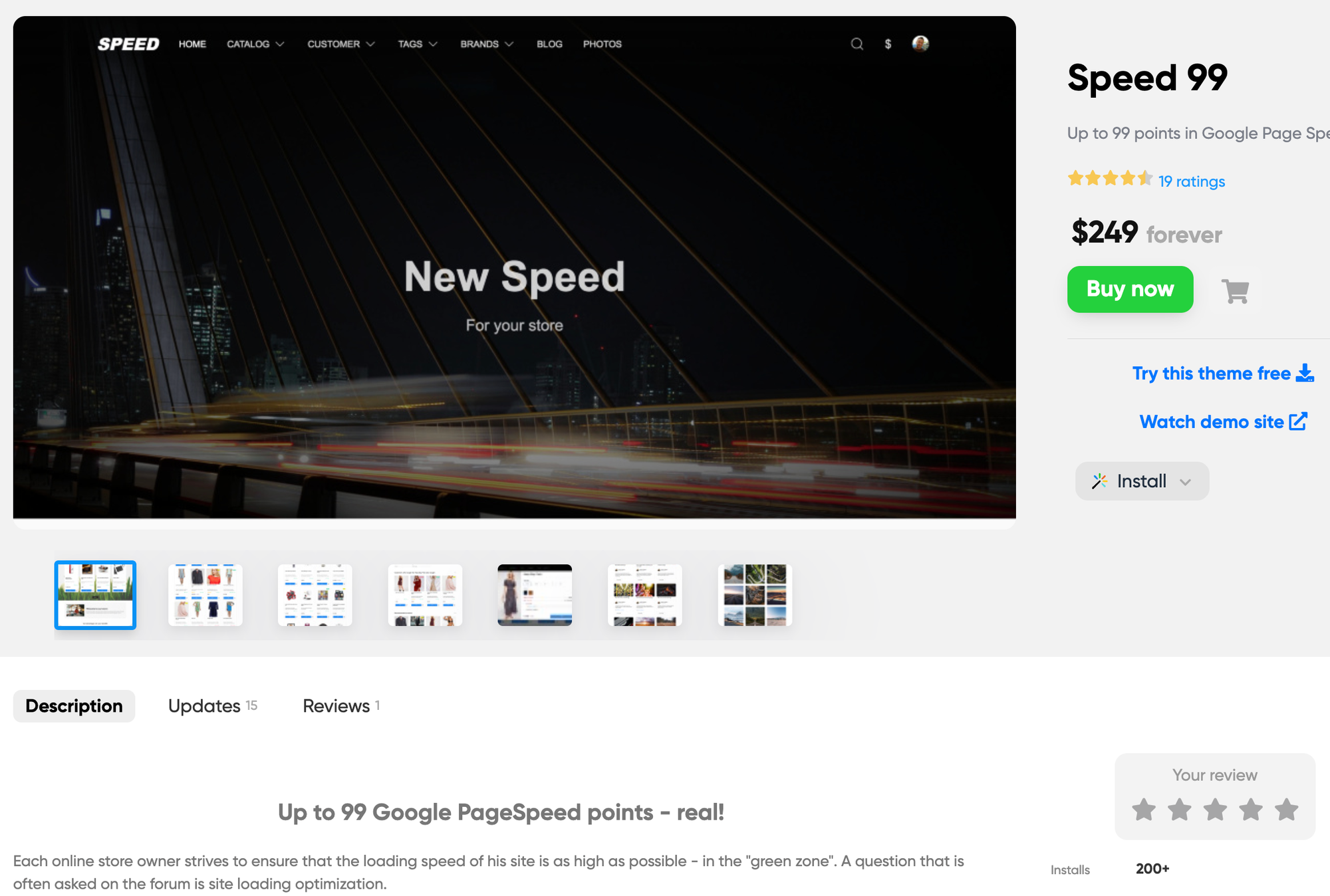
I named it exactly what it was. It was opinionated, ahead of its time — and merchants kept asking for a more traditional header. So I built Speed Classic on the same foundation, with the conventional layout they wanted.
Speed 99 planted a seed that would grow for years. The idea that a theme could be fast by architecture, not by accident — that stuck with me.
Between 2014 and 2022, I built 14 themes for Webasyst. They sold over 1,000 copies and earned around 200 five-star reviews from merchants across the Webasyst marketplace in Eastern Europe.
Eventually, I handed all my Weberia themes to a studio called Weldi for ongoing support and updates. They still sell and maintain them today.
Then the market shifted.
When Marketplaces Ate the Market
In Eastern Europe, something shifted. Massive marketplaces — think Amazon-scale platforms for the local market — started swallowing independent online stores whole. Why build your own store when you can open a seller account on a marketplace in minutes? No payment processing headaches, no shipping logistics, no website maintenance.
The demand for self-hosted e-commerce themes collapsed. It wasn't that Webasyst did anything wrong. The entire ecosystem around independent online stores shrank.
I watched it happen in real time. Fewer theme sales. Fewer new stores launching. The game I loved playing was running out of levels.
Life Outside Theme-Making
By that time, my first son was born — the same year as that interview, 2017. A few years later, my daughter arrived. Two kids changed how I think about work in ways I didn't expect. Less "code for the sake of coding," more "build something meaningful and be present."
I took a full-time position at an airline company. They had nothing but a header mockup for a new website when I joined. A year and a half later, we launched the full production site. It's still running, still selling tickets, still making money. Working in a team of that scale — with real stakeholders, real deadlines, real users booking flights — taught me things that solo theme development never could. Systems thinking. Cross-team communication. The weight of decisions when millions in revenue flow through your code.
After the airline, I built two internal enterprise portals at a major tech company. React, state management, feature-sliced design architecture. Big-scale apps with real complexity.
Good work. Good pay. But something was missing.
I Couldn't Stay Away
Here's the thing about building themes: it's a complete creative act. You design the system. You build the components. You think about the merchant who'll customize it, the customer who'll shop on it, the screen reader that'll navigate it. It's architecture, design, and empathy all at once.
Enterprise portals don't have that. Airline websites don't have that. They're important, they're complex, but they serve one client. A theme serves thousands.
I first discovered Shopify back in 2018. I remember working on an AMP theme at the time. The platform looked promising, so I started experimenting. Then Shopify overhauled their theme API, and months of work went to zero.
I tried again in 2022, joining the Shopify Theme Accelerator program. Was making real progress. But building a theme for Theme Store takes a year of full-time work with no income — and with two kids, that math doesn't work. When the airline offered me a position, I had to take it. Shopify went back on the shelf.
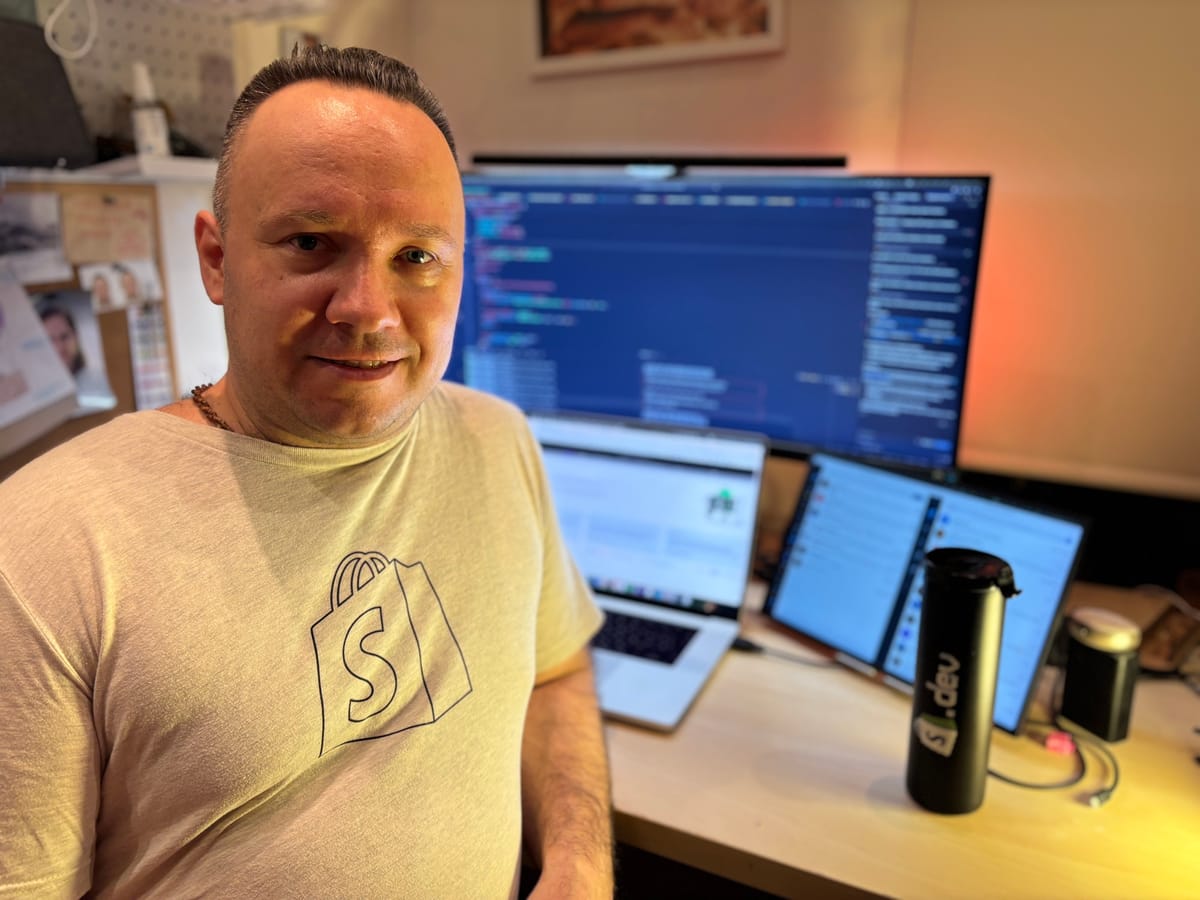
I made it to level 3 of 6 before I had to stop. Shopify sent merch — two Moleskines, a hoodie, a mug. I kept it all. Wore the t-shirt today.
Two times the timing wasn't right. This time it is.
The Game Resumes
But the world didn't stand still. While marketplaces were eating independent stores in my region, the opposite was happening globally. Niche brands, handmade artisans, beauty startups, fashion labels — they were all launching their own online stores. Not because marketplaces don't exist, but because owning your customer relationship, your brand, your margins — that's worth the effort.
Shopify was thriving at the center of it all, powering millions of these stores. And I kept looking at the theme ecosystem thinking: most of these themes could be so much better.
I wanted back in. Not just as a theme developer — but as someone who could bring everything I'd learned in enterprise back to the craft I loved. International-scale e-commerce. That was the pull.
What I Bring Back
A decade of building e-commerce themes taught me craft. Two years in enterprise taught me engineering discipline. Parenthood taught me to value time — mine and everyone else's.
When I came back to theme development, I came back different:
- I care about speed. Not as a marketing bullet point, but as a fundamental architecture decision. CSS-first, minimal JavaScript, progressive enhancement. Because every millisecond matters for conversion, and themes shouldn't be the bottleneck.
- I care about accessibility. The European Accessibility Act took effect in June 2025. Fines up to €100,000. But beyond compliance — 15% of the world's population lives with some form of disability. If your theme locks them out, you're leaving money and humanity on the table.
- I care about RTL. The MENA e-commerce market is $135 billion and growing at 21% annually. Arabic, Hebrew, Farsi — these aren't edge cases. They're massive markets that most Shopify themes ignore or half-support with plugins that break layouts.
- I care about architecture. Not because merchants should care about code. But because good architecture means themes that don't break when you customize them. Headers that work like LEGO blocks. Mega-menus with real width control. Sections that compose without conflicts.
These aren't features I bolted on. They're the foundation I built from day one.
From Weberia to weTheON
Weberia is retired. The name was meant to sound like a café for the web — a cafeteria of web delights. Cute idea, but the brand never quite worked out: people read it as feminine, the domain slipped away to squatters, and someone else claimed the name in the English-speaking world. Sometimes a brand just tells you it's done. Time for something new.
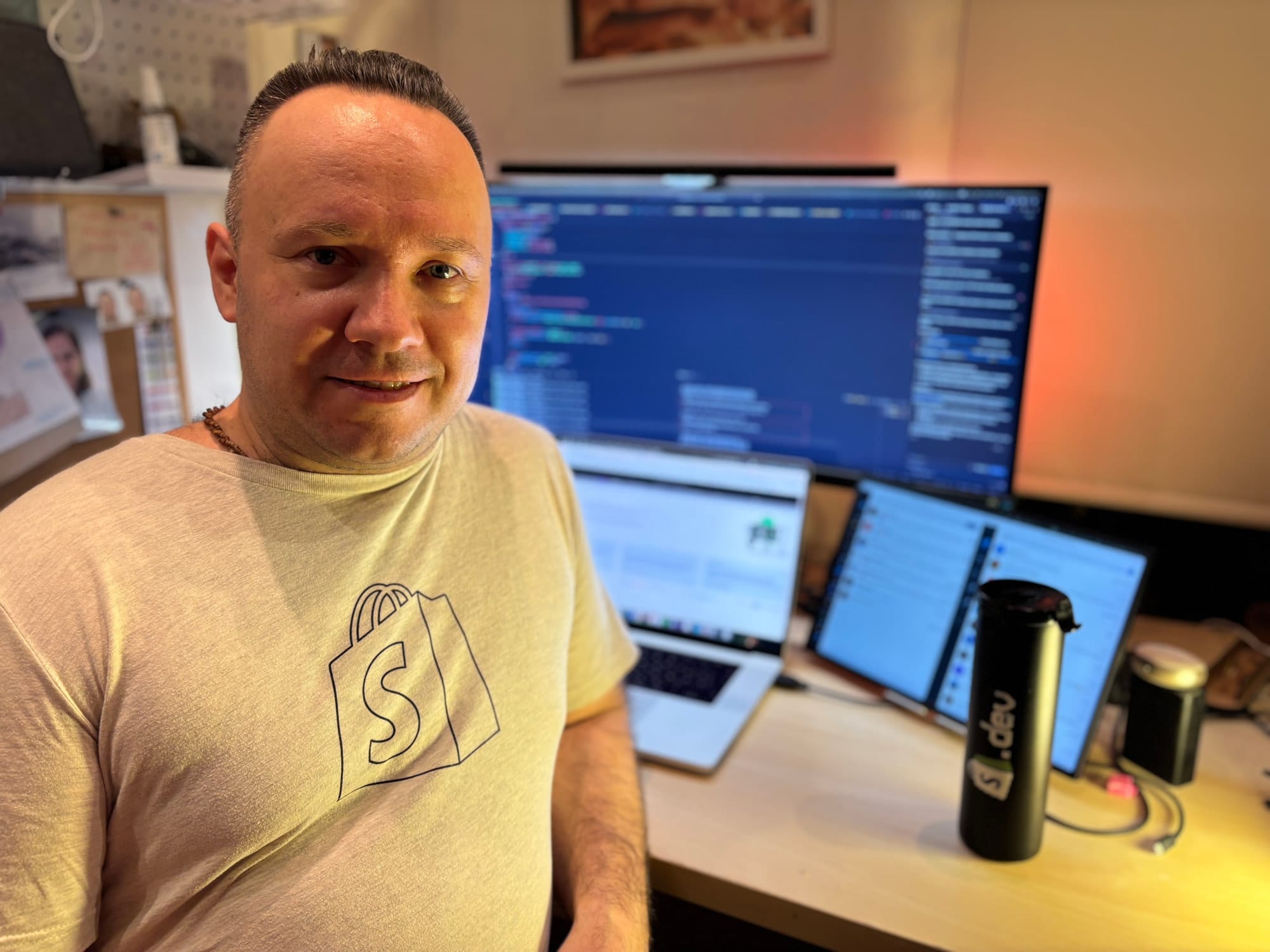
I'm still the guy who codes until 4am and walks around on cortisol all morning. Some things don't change. But what I build — and why — that's different now.
I've seen what real scale looks like — airline websites, enterprise portals, millions in revenue flowing through code I wrote. And I know what matters: not beating levels, but building tools that actually help people run their businesses.
weTheON is what comes next — Shopify themes focused on speed, accessibility, and RTL support. It's the same obsession with craft, but with ten more years of experience, a family that keeps me grounded, and a global market that actually needs what I'm building.
The name has layers:
- Web + Theme — that's the craft.
- «We the ON» — a manifesto: always on, always building. And if you say it fast, it sounds like vision. That's intentional.
- We — because I build for merchants and their customers, not just for myself.
It's a studio, not a single theme. First product line: a theme for handmade jewelry and accessories. Then beauty. Then fashion.
I'm building in public. This blog is where I share what I learn — about speed, accessibility, RTL, and the art of making themes that actually serve merchants instead of just looking good in demos.
If you're running a Shopify store and you've ever felt like your theme is holding you back — too slow, too rigid, too inaccessible — I'm building something for you.
Not because I have to. Because I tried walking away twice, and I couldn't.